Air + Fragrance · August 13, 2026
The One Word Doing All the Hiding
That one word on your label can legally hide dozens of ingredients. Here's why "fragrance" matters, what "unscented" really means, and the easiest first swap to make.
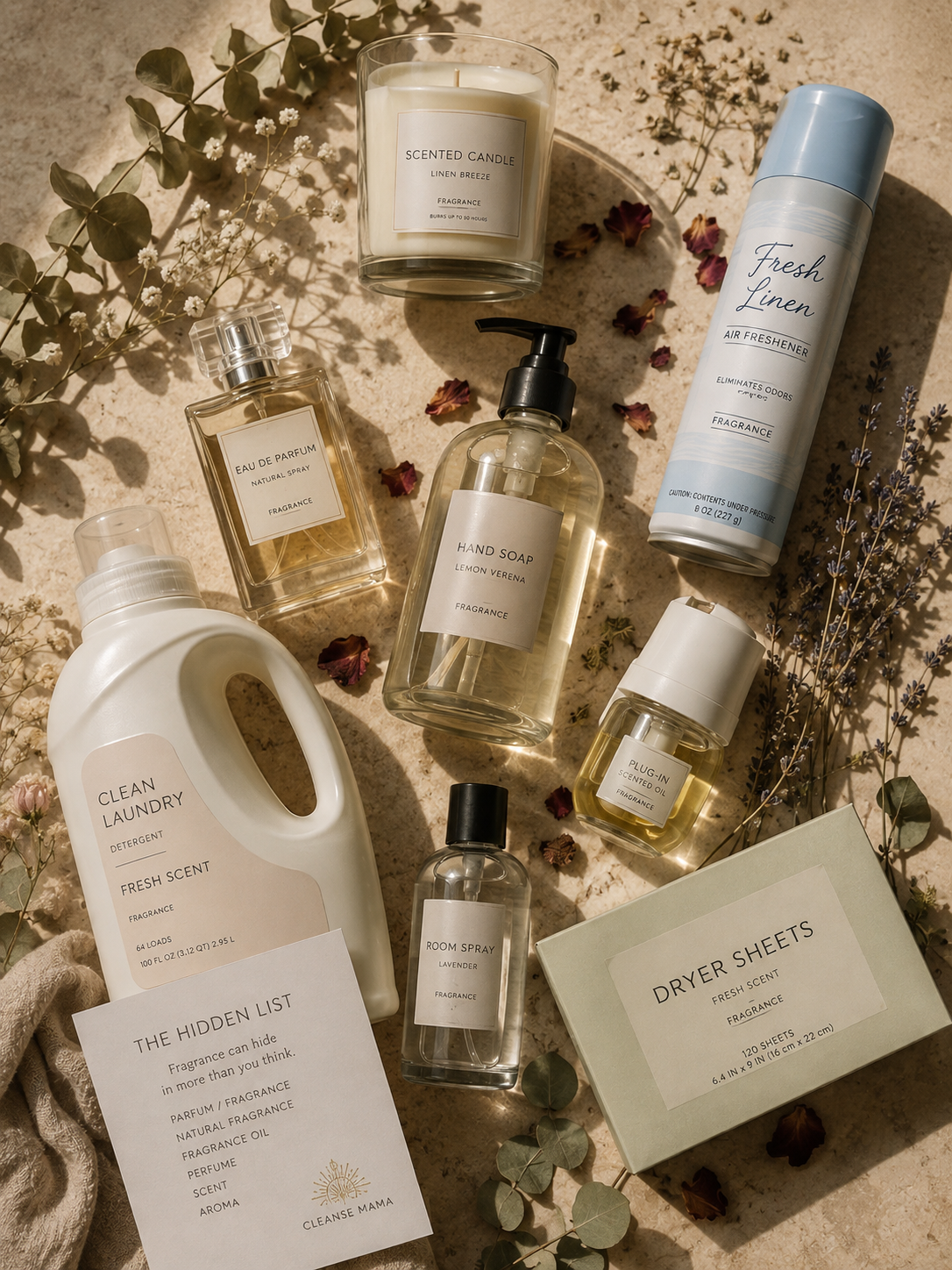
Here's a game you can play right now, love. Go grab three things from your bathroom — shampoo, lotion, whatever's closest — and flip them over. Look for the word "fragrance." Or its fancier cousin, "parfum." I'd put money on at least one of them having it.
Now here's the part that actually matters: that single word is legally allowed to stand in for dozens of individual ingredients, and the company doesn't have to tell you what they are.
Why "fragrance" gets to hide
This isn't a conspiracy, it's just an old loophole nobody's closed. Under U.S. law, cosmetic and personal care companies have to list their ingredients — that part's true. But fragrance formulas get carved out as "trade secrets," which means a brand can bundle a whole cocktail of chemicals under one word instead of naming them individually. It's been that way for decades, and it applies just as much to your $6 drugstore lotion as it does to the fancy stuff.
So when you see "fragrance" on a label, you're not looking at an ingredient. You're looking at a locked box.
"Unscented" isn't the same as fragrance-free
This one trips people up constantly, myself included at one point. "Unscented" doesn't mean nothing was added — it often means a masking fragrance was used to cancel out the smell of the other ingredients, without leaving a noticeable scent behind. So you can end up with fragrance chemicals in a product that doesn't smell like anything at all.
If you actually want to skip it, look for "fragrance-free." That phrase means what it sounds like. "Unscented" is doing something sneakier.
Why this is the swap I'd tell you to make first
Out of everything in this whole clean-living conversation, fragrance is the one I point people to first, because it's genuinely everywhere — laundry detergent, lotion, candles, dish soap, air freshener, dryer sheets, things that don't even market themselves as scented. And it's one of the easiest categories to simplify, because you don't need to become an ingredient detective to fix it. You just need to know the one word to watch for.
You don't have to swap everything at once. You already know that's not how we do things around here. Just start noticing where "fragrance" shows up in your daily rotation — the things you touch or breathe most — and when those bottles run dry, reach for something fragrance-free or scented with actual essential oils instead.
This isn't about fear
I want to be really clear about something: I'm not telling you fragrance is going to hurt you, and I'm not asking you to panic over a candle. What I am saying is that you deserve to know what's in the things you use every day, and right now, this one word is standing between you and that information. That's worth caring about, whether or not you ever change a single bottle.
But if you do want to start somewhere — start here. It's the highest-impact, lowest-effort swap on the whole list.
Free guide
The Non-Toxic Home Starter Guide
A room-by-room guide to lowering everyday toxins, with simple swaps and shoppable product recommendations.
Get instant accessKeep reading
Personal Care · September 11, 2026
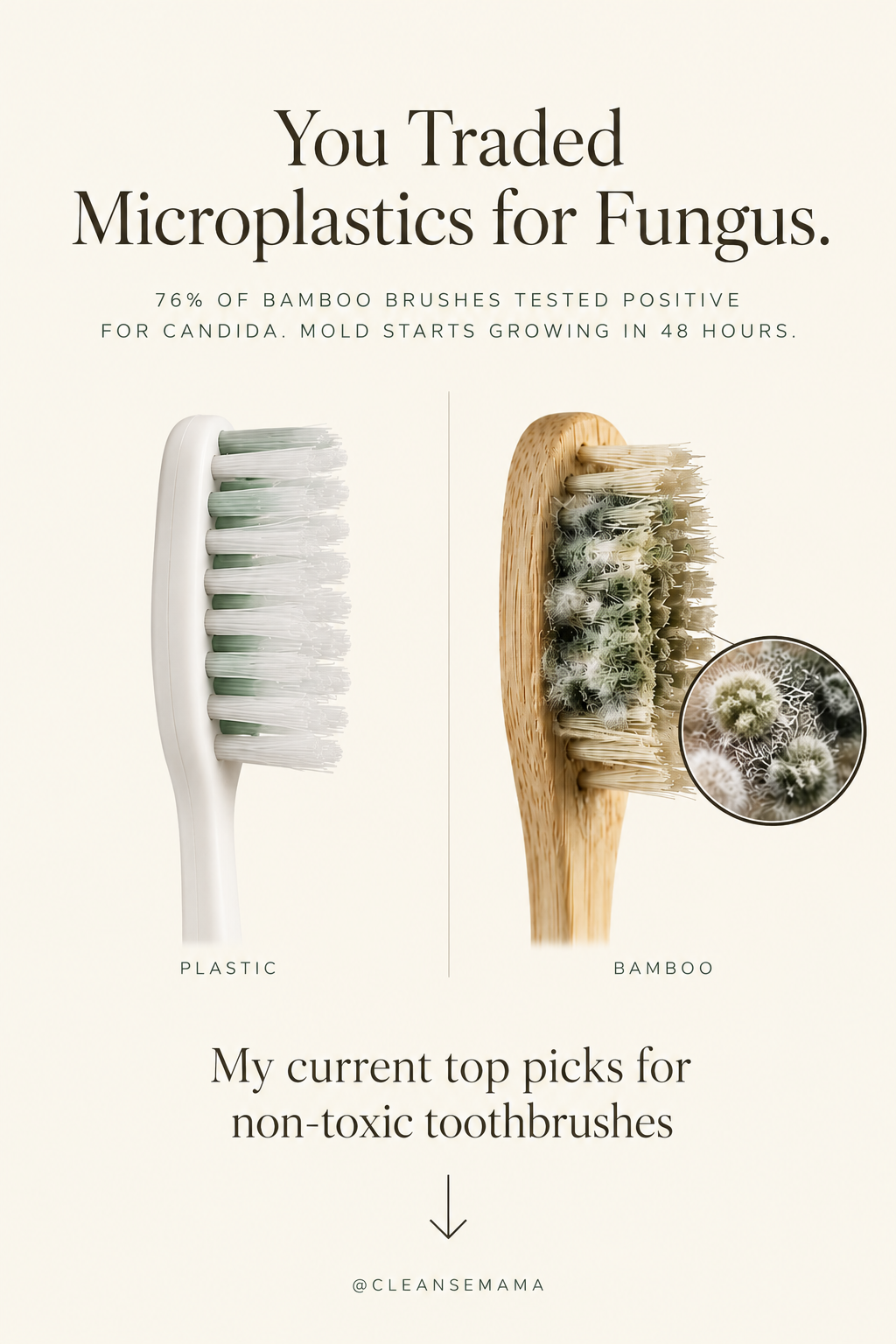
Bamboo Toothbrushes Can Grow Mold: The Healthier Non-Toxic Toothbrushes I Recommend
The wellness industry told us bamboo was the answer. Natural. Sustainable. Non-toxic. But after digging into the research, I learned something that completely changed my mind: natural doesn't always mean cleaner.
Read more →
Water · September 8, 2026
Hydrogen Water: What It Is, Why I'm Drinking It + My Favorite Hydrogen Water Bottles
If you've been seeing hydrogen water everywhere lately and wondering whether it's another wellness trend or something actually worth paying attention to, you're not alone. Here's what hydrogen water actually is, why I started drinking it, and the bottles I would look at first.
Read more →