
Water · September 8, 2026
Hydrogen Water: What It Is, Why I'm Drinking It + My Favorite Hydrogen Water Bottles
If you've been seeing hydrogen water everywhere lately and wondering whether it's another wellness trend or something actually worth paying attention to, you're not alone. Here's what hydrogen water actually is, why I started drinking it, and the bottles I would look at first.

I went down a rabbit hole about water.
And it started with a question that felt almost too simple:
What if we're spending so much time thinking about the quality of our food that we're forgetting about the thing we're using to hydrate every single cell in our body?
Think about it.
We can buy organic produce. We can choose grass-fed meat. We can read every ingredient label.
We can become incredibly intentional about what we're putting on our plates…
…and then drink whatever water is coming out of the tap.
That started to feel a little backwards to me.
Because water isn't just something we drink.
Our cells depend on it.
And that made me start asking:
What kind of water are we actually giving our bodies?
That's when I started looking into hydrogen water.
I thought I'd find another wellness trend.
Instead, I ended up going much deeper—into oxidative stress, mitochondria, inflammation, cellular signaling and a tiny molecule called molecular hydrogen.
And suddenly, something as basic as water became a lot more interesting.
I also spent way too much time comparing hydrogen bottles. I narrowed it down to three that I actually think are worth looking at—and I'm sharing those at the very end. So keep reading. 🐇
One important distinction: this isn't a filtration article.
Before we go any further, I want to make something really clear:
This article is not about water filtration.
If you're drinking tap water, well water, rainwater or another water source, test your drinking water first and find out what's actually in it.
Then choose a filtration or purification system that addresses the contaminants relevant to your particular water.
Hydrogen water does not replace filtration.
A hydrogen bottle isn't automatically going to remove heavy metals, pesticides, PFAS, chlorine or other contaminants.
Clean water comes first.
Once you've addressed the quality of your water, then we can have a completely different conversation about what else might make your water more supportive.
And that's what this article is about.
Hydrogen.
So what is hydrogen water?
Hydrogen water is simply water with dissolved molecular hydrogen (H₂) added to it.
Not the hydrogen that's already part of H₂O.
This is additional molecular hydrogen gas dissolved into the water, usually through electrolysis.
And here's where things get interesting.
Hydrogen is an incredibly small molecule, and researchers have been studying how it interacts with oxidative stress, inflammation, mitochondria and cellular signaling.
So naturally, I wanted to know:
Why would we want hydrogen in our water in the first place?
Let's talk about oxidative stress.
Your body naturally produces reactive oxygen species every day.
And you actually need some of them.
The problem is when the balance gets thrown off and oxidative stress starts putting more pressure on the body than it can comfortably manage.
And modern life gives us plenty of potential stressors—pollution, poor sleep, intense exercise, inflammation and environmental exposures.
This is where molecular hydrogen gets really interesting.
Research suggests H₂ may interact with highly reactive molecules while also influencing the body's own antioxidant and redox signaling systems.
In other words, hydrogen isn't interesting simply because it's an “antioxidant.”
It's interesting because of what it may be doing at the cellular level.
Your body already has a defense system.
This part really caught my attention.
Your body already has sophisticated systems for responding to oxidative stress.
One of them is the Nrf2 pathway, which plays an important role in cellular antioxidant and defense responses.
Research has found that molecular hydrogen can influence Nrf2-related signaling, along with other pathways involved in inflammation and cellular stress responses.
So instead of thinking about hydrogen as simply “destroying free radicals,” I started thinking about it differently:
Could molecular hydrogen help support the body's own ability to maintain balance?
That was enough to keep me digging.
And then I went down the mitochondria rabbit hole.
Your mitochondria are responsible for producing much of the energy your cells use.
They're also deeply connected to oxidative stress and cellular signaling.
Researchers are investigating molecular hydrogen's relationship with mitochondrial function and energy metabolism, including its potential role in supporting mitochondrial homeostasis.
Which made me wonder:
Could something as simple as the water we're already drinking become another small way to support cellular resilience?
That idea really got my attention.
What about inflammation?
Oxidative stress and inflammation are closely connected.
And researchers have been studying whether molecular hydrogen can influence pathways involved in inflammatory signaling, including NF-κB and MAPK pathways.
This is one of the reasons hydrogen water has become such an interesting area of wellness research.
The conversation isn't just about hydration anymore.
It's about how something as simple as molecular hydrogen may interact with the body's cellular environment.
And that's a much deeper rabbit hole.
What about energy and recovery?
This is another area that caught my attention.
Exercise naturally creates oxidative stress, and researchers have looked at whether hydrogen supplementation can influence antioxidant capacity and exercise-related recovery.
A systematic review of studies in healthy adults found an improvement in antioxidant potential with H₂ supplementation.
Which makes sense to me as another reason people interested in fitness, recovery and longevity are paying attention to hydrogen.
So why am I drinking it?
This is actually the simplest part.
I'm already drinking water.
Every single day.
So I started wondering:
What if I could make the water I already drink a little more supportive to my health?
I'm not replacing good food.
I'm not replacing sleep, movement, minerals or sunlight.
This is simply another tool.
And I love wellness tools that don't require a complicated protocol.
There's just one catch…
Hydrogen is a gas.
And gases escape.
Once hydrogen is dissolved into water, it can gradually leave the water, which is why hydrogen water is generally best consumed relatively soon after it's generated.
This is one reason I became interested in hydrogen-generating bottles.
Make it. Drink it. Keep moving.
Simple.
But then I discovered there are a lot of hydrogen bottles out there.
And they're definitely not all the same.
What I looked for
When I started comparing them, I paid attention to a few things:
- SPE/PEM technology.
The electrolysis technology being used.
- Hydrogen concentration.
You'll see numbers listed in PPB or PPM. I wanted to know what each device was actually producing.
- Materials.
Because what your water sits in matters to me.
- Testing.
I want to know what a company is actually measuring—not just what it's promising.
- Warranty.
If I'm using something every day, I want the company to stand behind it.
And after going much further down this rabbit hole than I intended…
I narrowed it down to three.
So let's get to them.
My Three Hydrogen Water Picks
1. DR.WATER HydroPitcher
My family pick.
If you're making hydrogen water for an entire household, this is the one that makes the most sense to me.
Instead of filling and charging individual bottles all day, a countertop pitcher allows you to make a larger quantity of hydrogen water at once.
I also love that this is a glass option, which means you're not storing your drinking water in a plastic bottle.
For a family, this is probably the most practical option of the three.
Best for: families + everyday home use + minimizing plastic water contact
Shop the DR.WATER HydroPitcher →
These are affiliate links. As an Amazon Associate I earn from qualifying purchases. Buying through them costs you nothing extra and helps keep this content free.
2. Echo Flask
My premium portable pick.
If you want something beautifully designed that you can actually take with you, this is the one that stood out to me.
The Echo Flask uses SPE/PEM technology to generate dissolved molecular hydrogen in a relatively short cycle.
And here's something I think is important when comparing hydrogen bottles:
The Echo Flask isn't glass.
It uses PPSU, a high-performance plastic, for its water-contact components. Echo states that its PPSU is BPA-, BPS- and PFAS-free and that the bottle is designed to withstand the pressure generated during hydrogen production.
So while I generally prefer glass for drinking-water storage, I understand the engineering tradeoff here.
If portability, durability and performance are your priorities, this is my premium pick.
Best for: travel + portability + premium design
These are affiliate links. As an Amazon Associate I earn from qualifying purchases. Buying through them costs you nothing extra and helps keep this content free.
3. PIURIFY Hydrogen Water Bottle Generator
My value pick.
If you want to try hydrogen water without jumping straight into a premium bottle, the PIURIFY is a good place to start.
It uses SPE/PEM technology with platinum-coated electrolysis and has a compact, portable design.
This is the option I'd consider if you're curious about hydrogen water but aren't ready to invest in a higher-end system.
Best for: beginners + portability + value
Shop the PIURIFY Hydrogen Water Bottle →
These are affiliate links. As an Amazon Associate I earn from qualifying purchases. Buying through them costs you nothing extra and helps keep this content free.
So… why not make your water a little more supportive?
After going down this rabbit hole, I kept coming back to one simple thought:
If I'm already drinking water every single day, why not make that water a little more supportive to my health?
Once you've tested your water and addressed the contaminants that matter for your particular source, hydrogen is a completely different layer of the conversation.
It's not about replacing the basics.
It's about adding something to a ritual you're already doing.
No complicated protocol.
No handful of capsules.
No remembering another supplement three times a day.
Just make your water, drink it, and go about your day.
We're already hydrating our cells all day long.
So why not make that hydration a little more intentional?
Because sometimes supporting your health isn't about doing something completely new.
It's about taking something you're already doing every single day…
…and making it just a little bit better.
And water is a pretty good place to start. 🐇💧
This article is for educational purposes only and is not intended to diagnose, treat, cure, or prevent any disease.
Some links in this article are affiliate links, which means I may earn a commission if you purchase through them, at no additional cost to you.
As an Amazon Associate I earn from qualifying purchases.
Free guide
The Non-Toxic Home Starter Guide
A room-by-room guide to lowering everyday toxins, with simple swaps and shoppable product recommendations.
Get instant accessKeep reading
Personal Care · September 11, 2026
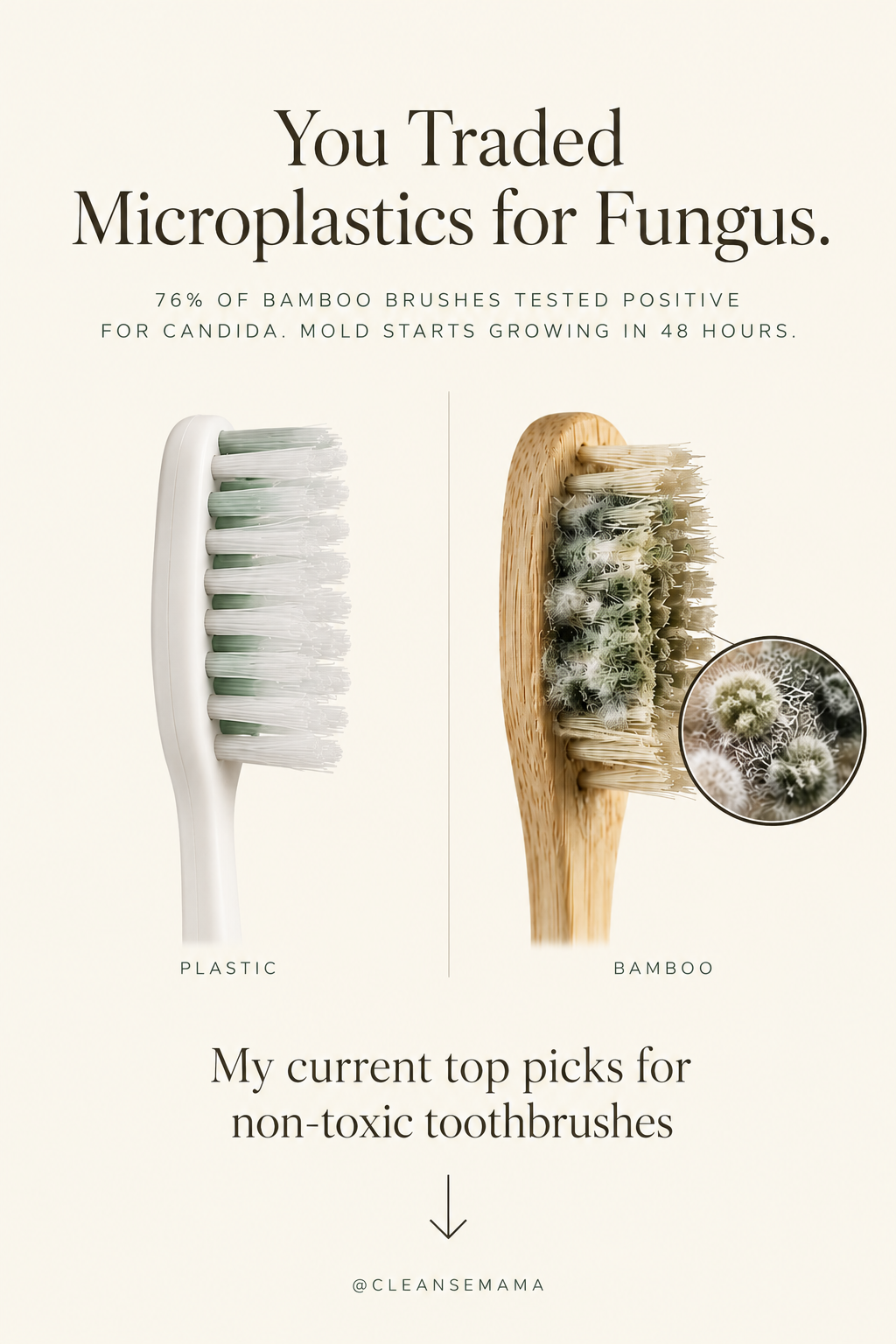
Bamboo Toothbrushes Can Grow Mold: The Healthier Non-Toxic Toothbrushes I Recommend
The wellness industry told us bamboo was the answer. Natural. Sustainable. Non-toxic. But after digging into the research, I learned something that completely changed my mind: natural doesn't always mean cleaner.
Read more →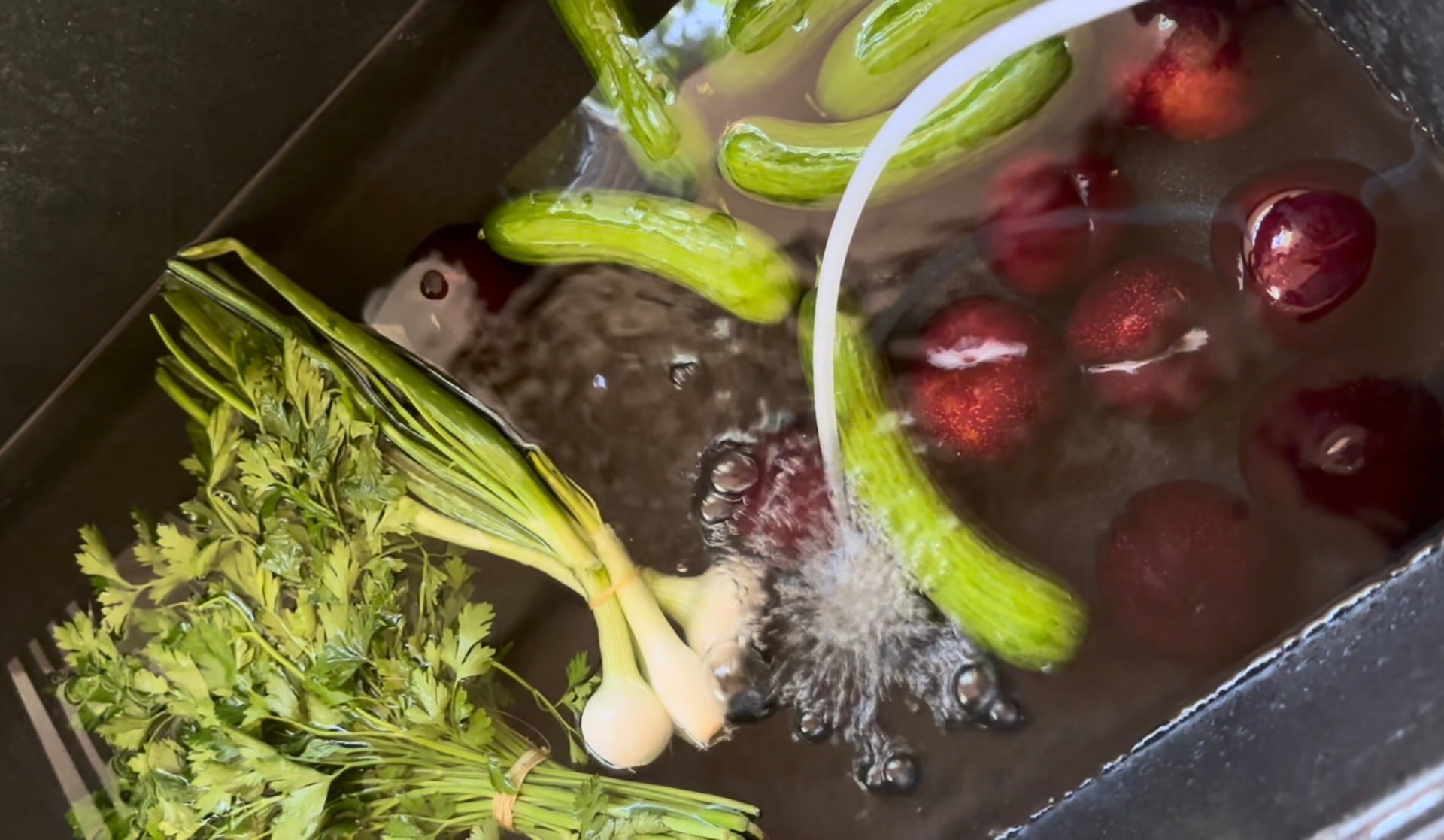
Kitchen · August 31, 2026
The $50 Ozone Generator That Changed How I Wash My Produce
I used to have a whole production every time I came home from the grocery store. Now I fill my sink, drop in an ozone generator, and walk away.
Read more →