Kitchen · August 27, 2026
The Foil Habit Worth Breaking
Foil isn't inert once it hits the oven. Here's what actually happens when aluminum meets heat, when it matters most, and the simple swaps that make the habit easy to break.

Foil is one of those things nobody questions. It's just... there. Wrap the leftovers, cover the dish, line the pan. Nobody stops to ask what it's actually doing while it sits against hot food for forty-five minutes.
So let's ask.
What actually happens when foil meets heat
Aluminum foil isn't inert once it hits the oven. Heat and moisture cause a small amount of aluminum to migrate from the foil into whatever it's touching, and that amount goes up with a few specific conditions: higher temperatures, longer cook times, and — this is the big one — acidity. Tomatoes, lemon, vinegar-based marinades, anything tangy, all speed up the process. Salt does something similar. Some studies on this have found the increase in a dish's aluminum content to be fairly small; others, especially with acidic or well-seasoned foods cooked a long time, have found it climbs a lot higher.
I want to be straight with you here: the research on what this means for your actual health is genuinely mixed, and reasonable people land in different places on it. What isn't in question is that the leaching itself happens, it increases with heat, acidity, and salt, and your body has no actual use for aluminum — it's not a nutrient we're short on. Given that, and given how easy the alternative is, I don't see much reason to keep leaning on it as the default.
Where it matters most
If you're going to be selective about this instead of cutting foil out entirely, the moments that matter most are the ones stacking multiple factors at once: something acidic, something salty, cooked a long time, at a high temperature, in direct contact with the foil. Think a foil-wrapped fish with lemon and salt, roasted an hour. That's a very different situation than briefly tenting a dish to keep it warm for five minutes.
The swaps that actually work
Unbleached parchment is the easy one-to-one swap for lining pans and wrapping food for the oven. It does the same job — nonstick surface, easy cleanup — without the metal involved at all.
Glass or stainless food storage replaces foil for leftovers. It won't tear, it won't react with acidic food sitting in the fridge overnight, and you're not throwing it away after one use.
A lid or a plate over a bowl covers most of what you'd tent foil over on the stovetop or in the microwave.
If you do use foil, keep parchment between the food and the foil so there's no direct contact, and save it for things that aren't acidic, salty, or cooked for hours at high heat.
The point isn't fear
I'm not telling you one foil-wrapped baked potato is going to hurt you. I'm telling you there's an easy swap sitting right next to it in the drawer, and once you know what foil is actually doing under heat, there's not much reason to reach for it out of habit. Use what's left in the roll, and let parchment take over from here.
Free guide
The Non-Toxic Home Starter Guide
A room-by-room guide to lowering everyday toxins, with simple swaps and shoppable product recommendations.
Get instant accessKeep reading
Personal Care · September 11, 2026
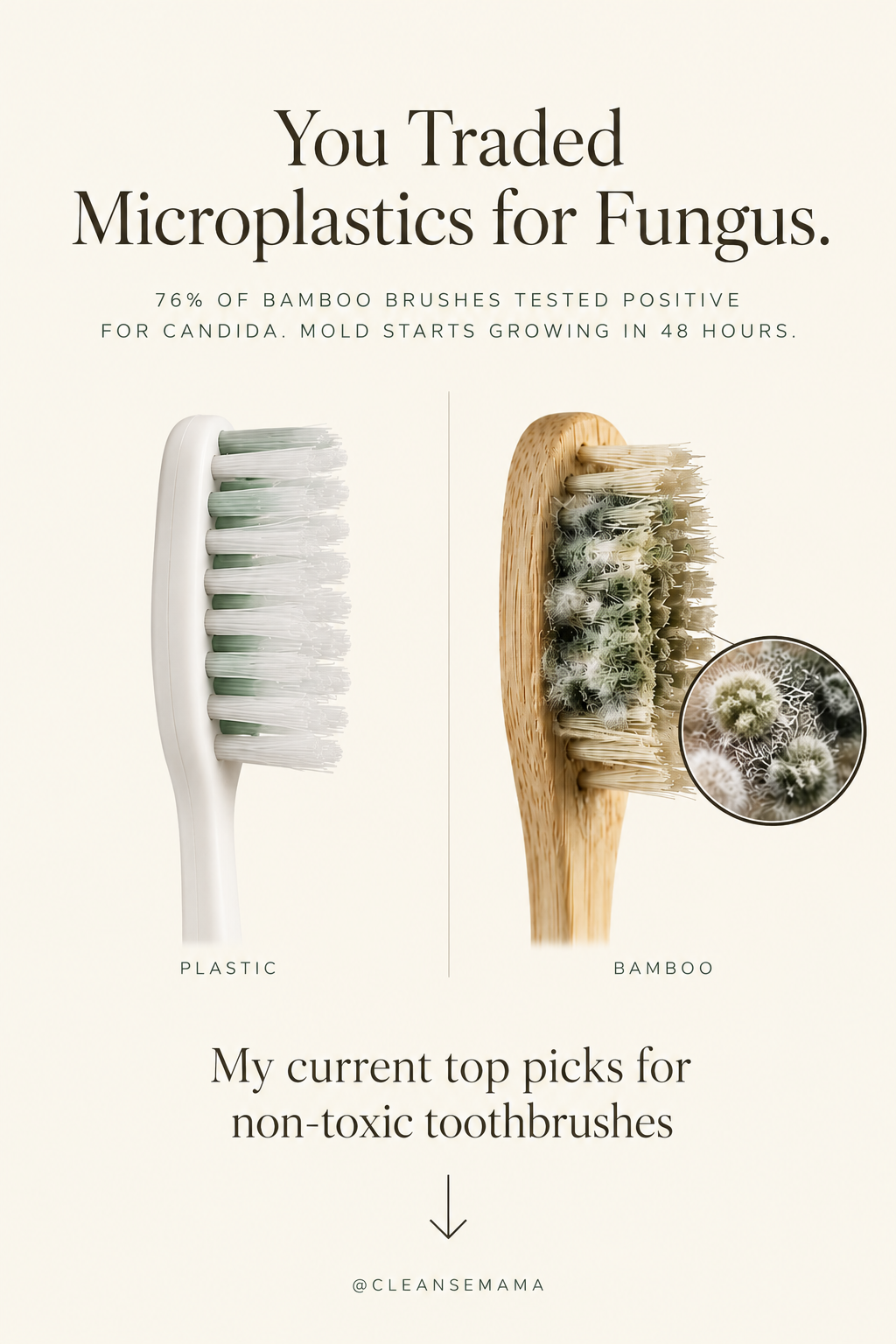
Bamboo Toothbrushes Can Grow Mold: The Healthier Non-Toxic Toothbrushes I Recommend
The wellness industry told us bamboo was the answer. Natural. Sustainable. Non-toxic. But after digging into the research, I learned something that completely changed my mind: natural doesn't always mean cleaner.
Read more →
Water · September 8, 2026
Hydrogen Water: What It Is, Why I'm Drinking It + My Favorite Hydrogen Water Bottles
If you've been seeing hydrogen water everywhere lately and wondering whether it's another wellness trend or something actually worth paying attention to, you're not alone. Here's what hydrogen water actually is, why I started drinking it, and the bottles I would look at first.
Read more →